i
The Bronx · Pelham Bay
Hunter Island in winter: seals, owls and silence
- Range
- Pelham Bay
- Habitat
- Rocky shoreline
- Oak woodland
- Salt marsh edge
- Glacial boulder fields
- Field marks
- An empty crescent beach, gray rocks offshore with seals hauled out, huge boulders in leafless oak woods, and wind off Long Island Sound.
- Best season
- December to March
- Transit
- 6 train to Pelham Bay Park, then bus or long walk
- From Midtown
- 6 train to Pelham Bay Park
- Pack
- Warm layers, binoculars, scope, flask, sturdy boots
In July, Orchard Beach is one of the busiest places in the Bronx. In January, it is one of the emptiest. The sand is swept by wind off Long Island Sound, the parking lots stand bare, and the only sound on the promenade is the slap of water against the rocks. Walk to the north end of the beach and on into the woods, and you reach Hunter Island, the quiet heart of Pelham Bay Park in winter.
Pelham Bay Park is the largest park in New York City, at about 2,700 acres, more than three times the size of Central Park. Much of it is marsh, woodland and shoreline. Hunter Island and its smaller neighbor, Twin Island, sit at its eastern edge. They were joined to the mainland in the 1930s, when Orchard Beach was built by filling in the water between them.
Boulders the ice brought south
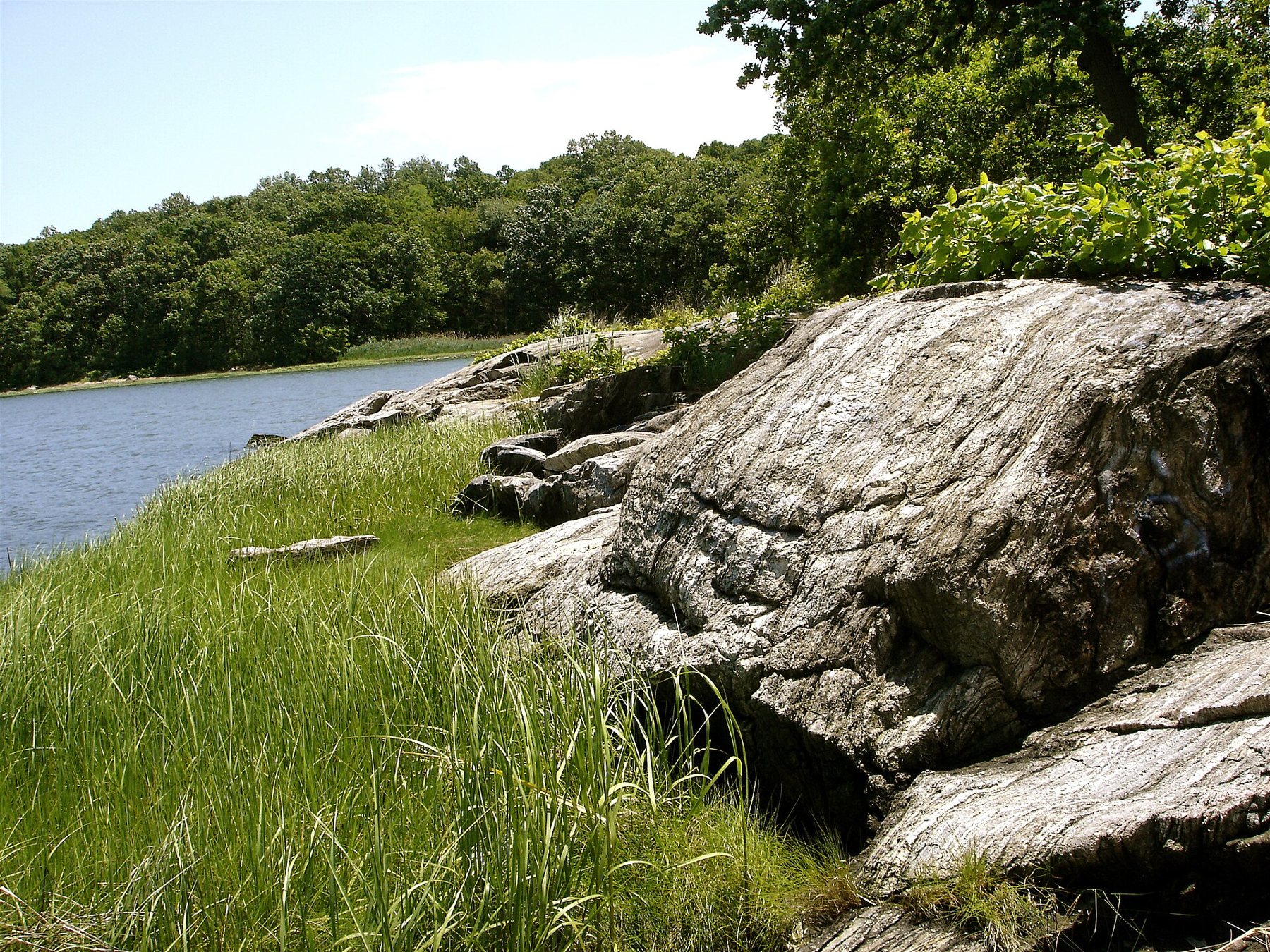
The first thing you notice on Hunter Island, once the leaves are down, is the rock. The shoreline is a jumble of gray bedrock streaked and folded with lighter bands, very different from the sand of the beach next door. In the woods stand enormous boulders, some as big as a small room, resting on ground made of quite different stone.
These are glacial erratics: rocks picked up by the ice sheet as it moved south and dropped where the ice melted. Some came from not far away; others travelled many miles. Pelham Bay Park has some of the most striking erratics in the city, and winter, with bare trees and low light, is the best time to see their shapes. Local tradition links some of them with the Siwanoy, the Native people who lived along this shore before European settlement. Treat those stories with care, and leave the stones as you find them.
The Kazimiroff Nature Trail loops through the woods of Hunter Island and is the easiest way to see the boulders without losing your bearings.
i

Seals on the outer rocks
From late autumn to early spring, harbor seals come into the waters of western Long Island Sound, and rocks off Hunter Island and Twin Island are among the places where they haul out to rest. As the tide falls and the rocks show above the water, you may see them lying in a row, round and gray, heads and tails lifted in a curve like a banana.
Nothing is certain. Some winter days the rocks are empty; seals come and go with the tide, the weather and disturbance. A calm day with a lowish tide in the middle of the day gives you the best chance, and a spotting scope helps a great deal. The rocks are some way out, and that distance is right.
i

Keep it that way. Seals rest on rocks to save energy and warmth, and a seal that has to slide into the water because someone came too close loses both. Stay on the shore, keep at least 50 yards away, keep your voice down, and never try to get closer by boat, by wading or across ice. If a seal lifts its head and watches you, you are already too close. A lone seal on a beach is usually resting, not stranded; leave it alone, and report it to the authorities if it seems hurt.
Compare plate XIClay Pit Ponds: sand barrens on the far shoreWhite-tailed deer have also become common in the park in recent years. In the bare woods you may see them moving between the trees or, like the one above, grazing beside the beach. Give them space too.
Owls and the rule of silence
The evergreens and thickets of Pelham Bay Park have long been known as a winter roosting place for owls. During the day they sit still, pressed close against a trunk, resting before a night of hunting. They are hard to find, and they should be.
If you happen to see an owl, the rules are simple and strict:
- Keep well back, stay on the trail, and move on after a short look.
- Do not play calls or recordings, and do not make noises to make it open its eyes.
- Do not use a flash, and do not stand under the roost for a better photograph.
- Do not share the location, online or in person. A roost that becomes known draws crowds, and crowds drive the bird away.
An owl flushed in daylight burns energy, risks being mobbed by crows or attacked by hawks, and may abandon a safe roost. A good day is one on which the owl never knew you were there. Many experienced birders choose not to look for roosting owls at all, and enjoy the woods without them.
Ducks on the cold water
Winter is also duck season on the Sound. From the shore around Hunter and Twin Islands, scan the open water for brant and diving ducks: long-tailed ducks, red-breasted mergansers, buffleheads, common goldeneyes and scaup, with common loons and horned grebes at times. On calm days they are easy to see; in wind and waves, the scope again earns its weight.
Around the lagoon and the marshes in other parts of the park you may find great blue herons, gulls of several kinds and, in some winters, hawks hunting over open ground. For a sense of how the year turns around the city, from winter ducks to spring warblers, see the birding year in the five boroughs.
The long way out, and the way back
Take the 6 train to its last stop, Pelham Bay Park. From the station it is a long walk to Orchard Beach and Hunter Island: allow an hour or more on foot, partly along roads and paths through the park. City buses run towards the beach and City Island, but routes and seasonal service change, so check the current timetable before you set out. Daylight is short in winter; plan to be off the trails and heading back well before dark.
i

Cold, wind and a little caution
The shore of the Sound is colder than the streets of the Bronx. Wind off the water can cut through a coat that felt warm on the platform, so wear layers, a hat and gloves, and bring something hot to drink. Facilities around the beach may be closed in winter.
- Rocks along the shore are slippery with ice, weed and spray. Do not climb out on them.
- Paths can be icy or muddy; sturdy boots help.
- Ticks can be active on mild winter days; check yourself after walking through brush.
- Park rules, closures and trail conditions change; check before you go.
On a still winter afternoon, with the beach empty and the light fading on the water, Hunter Island is as close to silence as the city gets. For another reserve that changes completely with the season, try the loop round West Pond at Jamaica Bay.
A good day is one on which the owl never knew you were there.