i

Queens · Douglaston
Alley Pond Park: the big tulip tree and the kettle ponds
- Range
- Douglaston
- Habitat
- Kettle ponds
- Oak and tulip woods
- Tidal creek marsh
- Field marks
- Highway noise fading into oak woods, small round ponds in hollows, very tall straight tulip trees, and a reed-lined creek with egrets at the north end.
- Best season
- April, May, October
- Transit
- LIRR to Douglaston, or a city bus
- From Midtown
- LIRR to Douglaston, then walk
- Pack
- Binoculars, trail map, water, insect repellent
Alley Pond Park is a park that highways tried hard to cut into pieces. Expressways and parkways cross it, and you hear them from most of its trails. Yet inside those lines are some of the wildest woods in Queens, a string of small glacial ponds, and a tidal creek whose marsh still floods and drains with Little Neck Bay. It rewards anyone willing to walk past the noise.
What the glacier left behind
About twenty thousand years ago, the ice sheet that covered this part of North America stopped near here, and when it melted it left a long ridge of sand, gravel and boulders across Long Island and Queens. As the ice retreated, blocks of it were buried in that debris. When they melted, the ground slumped into round hollows, and many filled with water.
These kettle ponds are scattered through the southern woods of Alley Pond Park. Some hold water all year; others shrink in dry summers and fill again in spring. They are small, shaded and quiet, and they matter far beyond their size. Frogs breed in them in spring, dragonflies hunt over them in summer, and wood ducks or a green heron sometimes feed in their edges.
If you know the ponds of Staten Island, the kettles here will feel familiar; the blue trail over Moses Mountain passes ponds that sit in a similar glacial landscape.
The tall tree in the woods
Somewhere in the park stands a tulip tree known as the Queens Giant. It is often described as the oldest and tallest living thing in New York City, with an age usually put at several centuries, though no one can count its rings without harming it. Whatever its exact numbers, it is a remarkable tree: a straight gray trunk rising far above the canopy around it.
Tulip trees are among the tallest native trees of the East, and the park has many fine ones. You know them by their leaves, shaped like a tulip flower in outline with a squared-off tip, and in late spring by their green-and-orange cup-shaped flowers, often found fallen on the trail before you notice them overhead. The Giant itself stands in a protected area, and park rules on where you may walk change, so admire it from where you are allowed to be and do not trample the ground around its roots.
Alley Creek and the tidal marsh
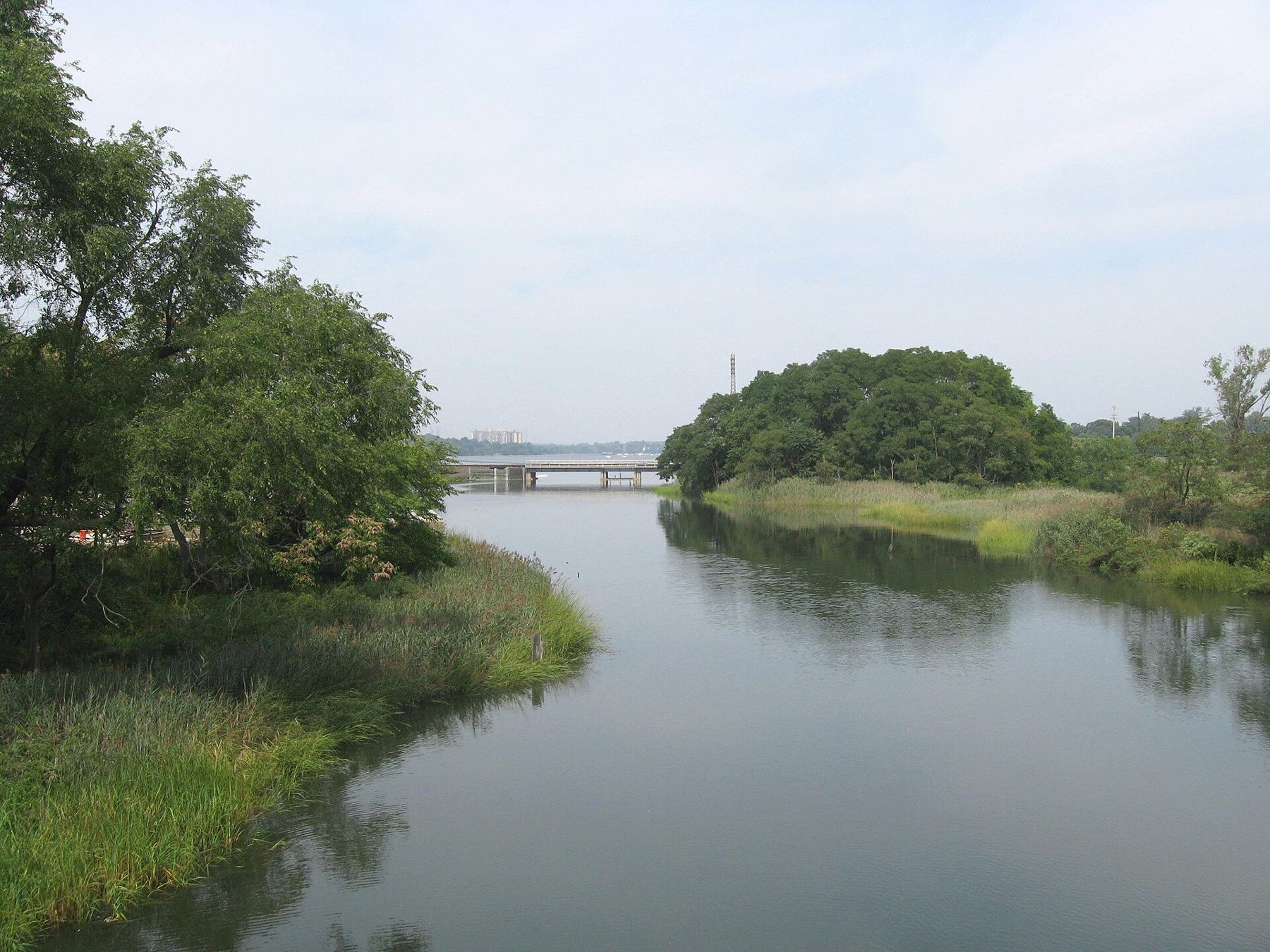
Compare plate XVReading a tide table for the city's marshesThe northern end of the park is a different world. Here Alley Creek runs north into Little Neck Bay, and the land along it is tidal marsh: cordgrass, reeds, mudflats at low water, and a smell of salt. The tide rises and falls here twice a day, as it does in the marshes of Brooklyn and Jamaica Bay.
Egrets and herons feed along the creek from spring to autumn. Ospreys fish the bay, and in winter ducks gather on the open water. Fiddler crabs come out on the mud as the tide drops in warm months, much as they do at Gerritsen Creek on a summer evening.
The marsh is also where the park's name makes most sense. Alley Creek once drained a much larger wetland, and much of it was filled for roads and building in the last century. What remains has been partly restored, with native marsh grasses replanted where reeds and fill had taken over. Restoration work comes and goes, so expect fencing or closed paths in some years, and read any signs you meet on the way in.
Boardwalks and short trails let you reach the marsh edge without trampling it. Stay on them: the mud is softer and deeper than it looks, and the marsh plants do not recover quickly.
A building full of answers
On Northern Boulevard, at the edge of the marsh, the Alley Pond Environmental Center runs nature programs and keeps information on the trails. It is a good first stop if you are new to the park. Its opening hours and programs change, so look them up before you plan around them.
i
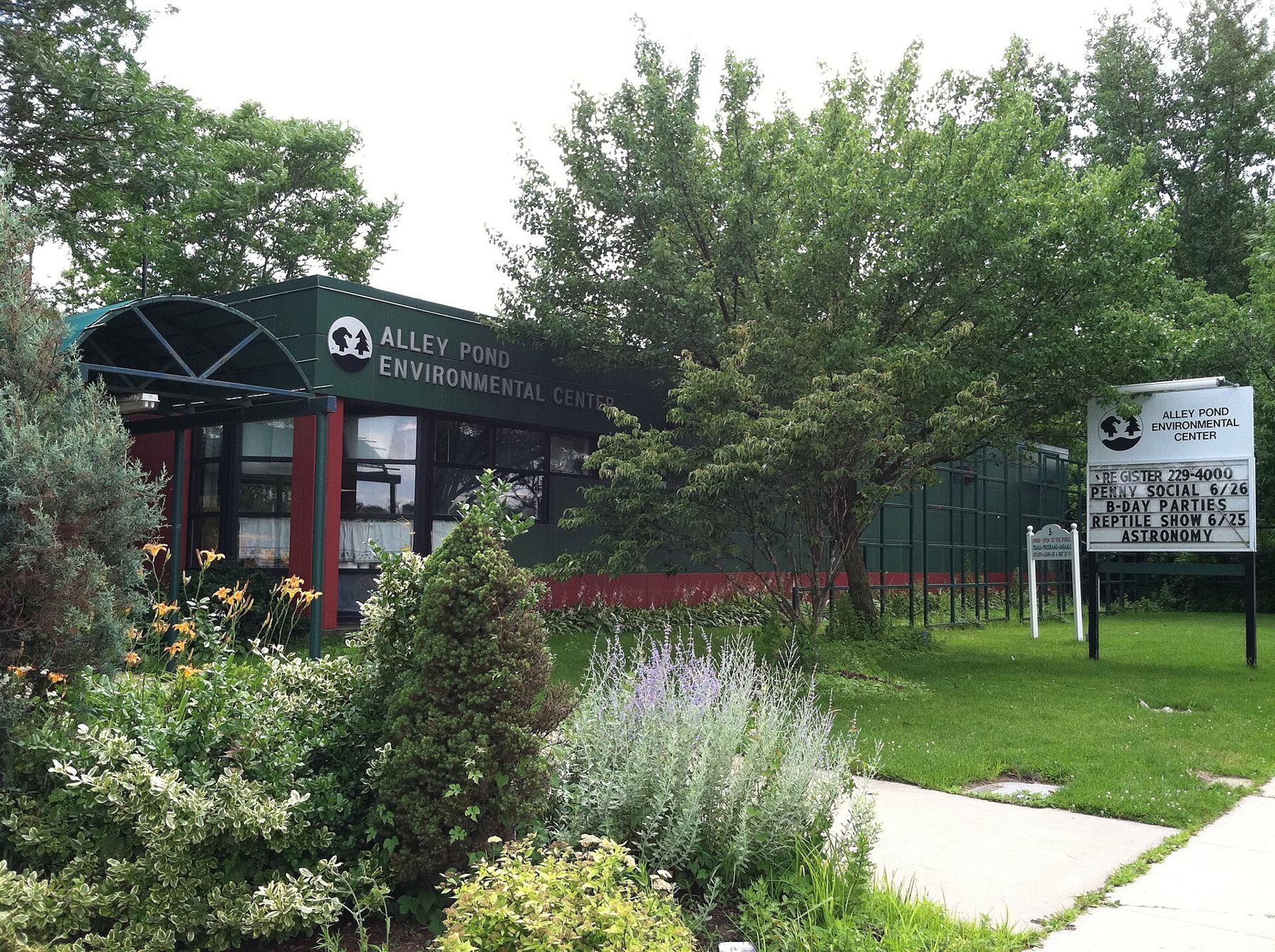
Trails from near the center lead out into the marsh, while the woods and kettles lie further south, across the expressway. The park is split into sections by roads, so it helps to carry a trail map and decide in advance which part you want to see.
Reaching the park without a car
The Long Island Rail Road's Port Washington branch stops at Douglaston, a walk of roughly twenty minutes from the environmental center and the marsh. City buses run along Northern Boulevard and other nearby roads; check current routes, as they change. The woods and kettle ponds in the south of the park are a longer walk from the station, so give yourself time.
Small cautions for a big park
- Ticks live in the leaf litter and grass. Long trousers and a check afterwards are worth the trouble.
- Poison ivy grows along many trail edges, as a vine on trees and as low shrubs.
- Mosquitoes breed around the ponds and in the marsh from late spring.
- Trails are not always clearly marked, and some cross or run near busy roads. Carry a map.
Spring, when the woods are full of migrating songbirds and the ponds are loud with frogs, is the best time for a first visit. October is a close second, with the tulip trees turning yellow and the creek quiet. For a sense of what else is moving across the city in those months, the birding year, month by month fills in the picture.