i
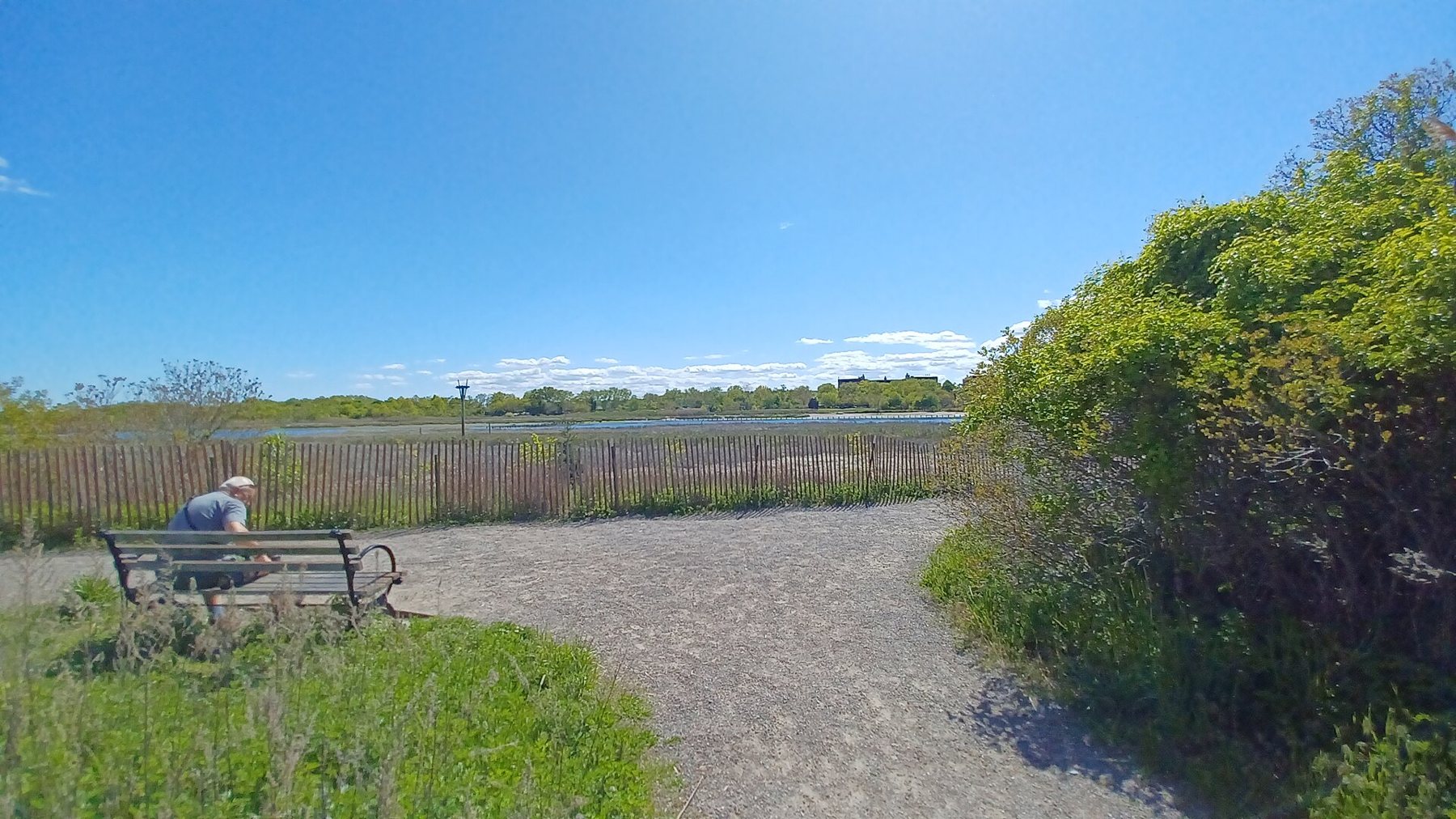
Brooklyn · Marine Park
Gerritsen Creek on a summer evening
- Range
- Marine Park
- Habitat
- Spartina salt marsh
- Tidal creek
- Coastal grassland
- Shrub thickets
- Field marks
- A gravel loop above green cordgrass and a winding tidal creek, crab holes in the mud, egrets in the channels and an osprey overhead.
- Best season
- June, July, August, September
- Transit
- Bus along Flatbush Avenue or Avenue U
- From Midtown
- Bus along Flatbush Avenue or Avenue U
- Pack
- Binoculars, repellent, water, tide times, closed shoes
By late afternoon in July most of Brooklyn is hot and loud. Down at the end of Avenue U, though, a breeze comes in off the water, the grass in the marsh shifts, and the noise drops away. Gerritsen Creek runs south through Marine Park toward Jamaica Bay, and the nature trail along its eastern bank is one of the best places in the city to watch a salt marsh settle into evening.
Marine Park is Brooklyn's largest park, though most people know it for ball fields, running tracks and the golf course. The wilder half lies along the creek: hundreds of acres of grassland, marsh and shoreline that have been restored over the years and are now managed as natural area.
The nature center and the loop
Start at the Salt Marsh Nature Center at the corner of Avenue U and East 33rd Street. It is the gateway to the trail and a good place to ask about recent sightings, the state of the paths and any programs. Hours vary by season and the building is sometimes closed, so check before you go; the trail itself can usually be walked when the center is shut, within park hours.
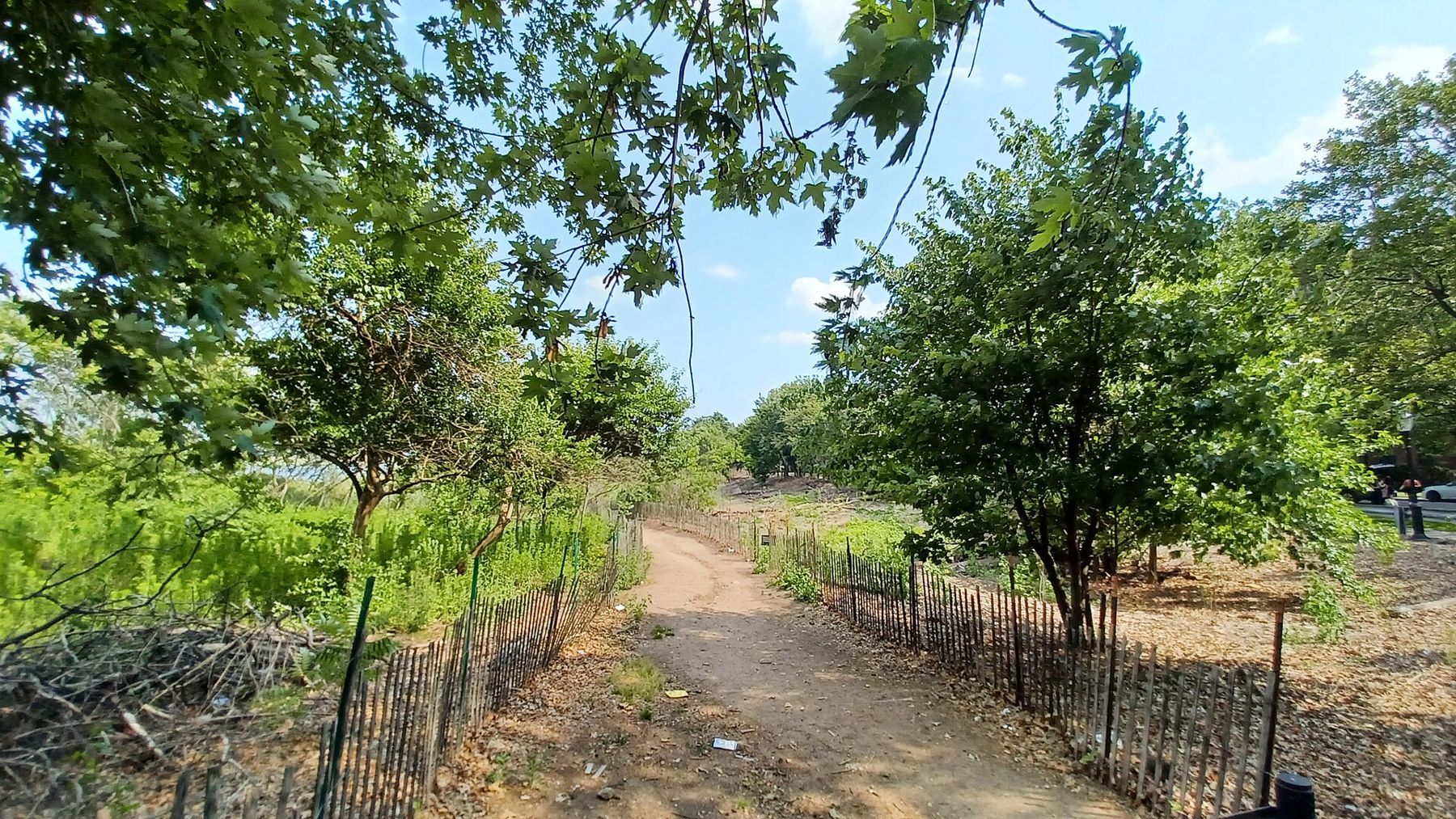
Behind the center a nature trail of about a mile circles through grassland and along the edge of the marsh. It is mostly level, with gravel and packed earth underfoot and a few lookout points with benches. There is little shade, which is one more reason to come in the evening. A slow walk with stops takes about an hour; birders and photographers often take much longer.
i
Cordgrass and the shape of the marsh
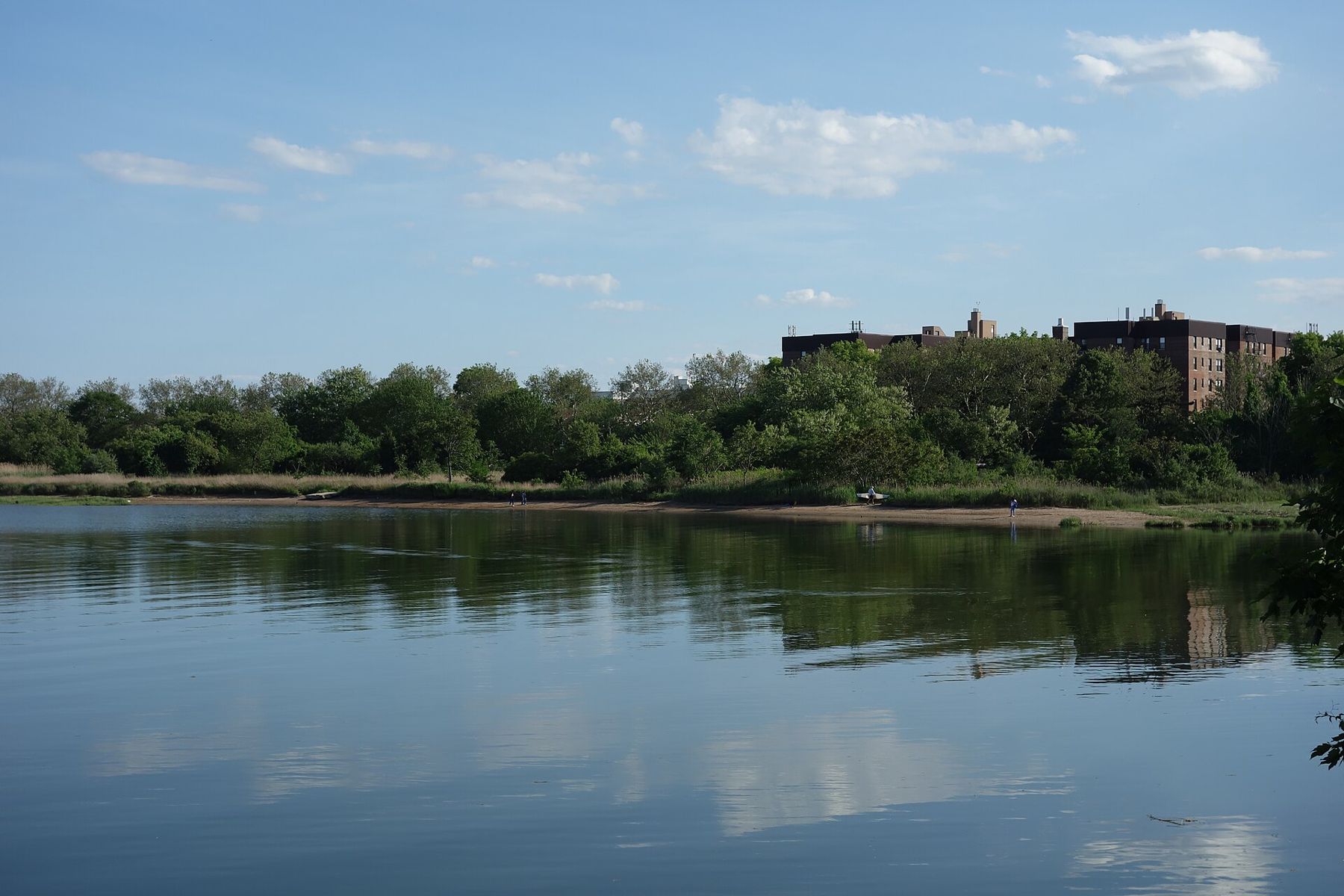
The marsh is built by grass. Along the creek and the lowest ground grows smooth cordgrass, Spartina alterniflora, tall and bright green in summer, flooded by every high tide. A little higher, where the water reaches only on the biggest tides, grows saltmeadow hay, Spartina patens, finer and softer, lying in swirls like uncombed hair. Between them, a difference of a few inches in height makes a different world.
Look closely at the base of the cordgrass along the creek bank and you may see ribbed mussels, dark and grooved, half buried among the roots. They filter the water at each high tide and help bind the bank together. Small fish such as mummichogs move up into the flooded grass to feed when the tide is in and drop back into the channels as it falls, which is one reason the wading birds follow the tide so closely.
The creek winds through all of it in loops, splitting into smaller channels that drain and fill twice a day. At high tide the marsh looks like a meadow standing in water. At low tide the channels empty to banks of gray mud, and the life of the marsh comes out onto them.
At low tide the channels empty to banks of gray mud, and the life of the marsh comes out onto them.
History is under the grass too. The creek once powered a tide mill, one of the earliest in the area, which held back water at high tide and let it run out through a wheel as the tide fell. The mill is long gone, but the creek still rises and falls on the same schedule.
Fiddler crabs on the falling tide
On a summer evening with the tide going out, look down at the mud along the creek edges. It may seem empty at first. Then something moves, and another, and soon you see that the bank is covered in small crabs, each about the size of a coin, sidling in and out of holes.
Compare plate XVReading a tide table for the city's marshesThese are fiddler crabs. The males carry one claw far larger than the other, which they wave in slow arcs to court females and warn off rivals. Females have two small claws and feed with both, scooping mud and picking out the organic matter. Their burrows let air and water into the marsh soil, and that helps the cordgrass grow.
Fiddlers are most active in warm months and at lower tides, when their part of the bank is uncovered. They disappear into their holes at the first shadow or footstep, so stand still at the edge of the trail and give them a few minutes. Do not step onto the mud: it is soft, often deeper than it looks, and the crabs and grass are easily crushed. If you want to time a visit to the tide, the basics are explained in reading a tide table.
i
Egrets, ospreys and the evening shift
The crabs and the small fish in the channels feed a lot of birds. Great egrets, tall and white with yellow bills, stalk the channels slowly. Snowy egrets are smaller and quicker, with black bills and yellow feet, and sometimes dash after prey with wings half open. Great blue herons, gray and much larger, stand motionless at the edges. In the evening, black-crowned night-herons, stocky gray-and-black birds with red eyes, start to stir from the thickets and fly out to feed.
Ospreys nest on platforms in and around the park from spring to late summer. Watch for a large brown-and-white bird hovering over the creek before folding its wings and dropping feet first into the water. If one is nesting within view, keep your distance and use binoculars rather than walking closer; more on their habits and nest sites is in ospreys in Brooklyn.
i
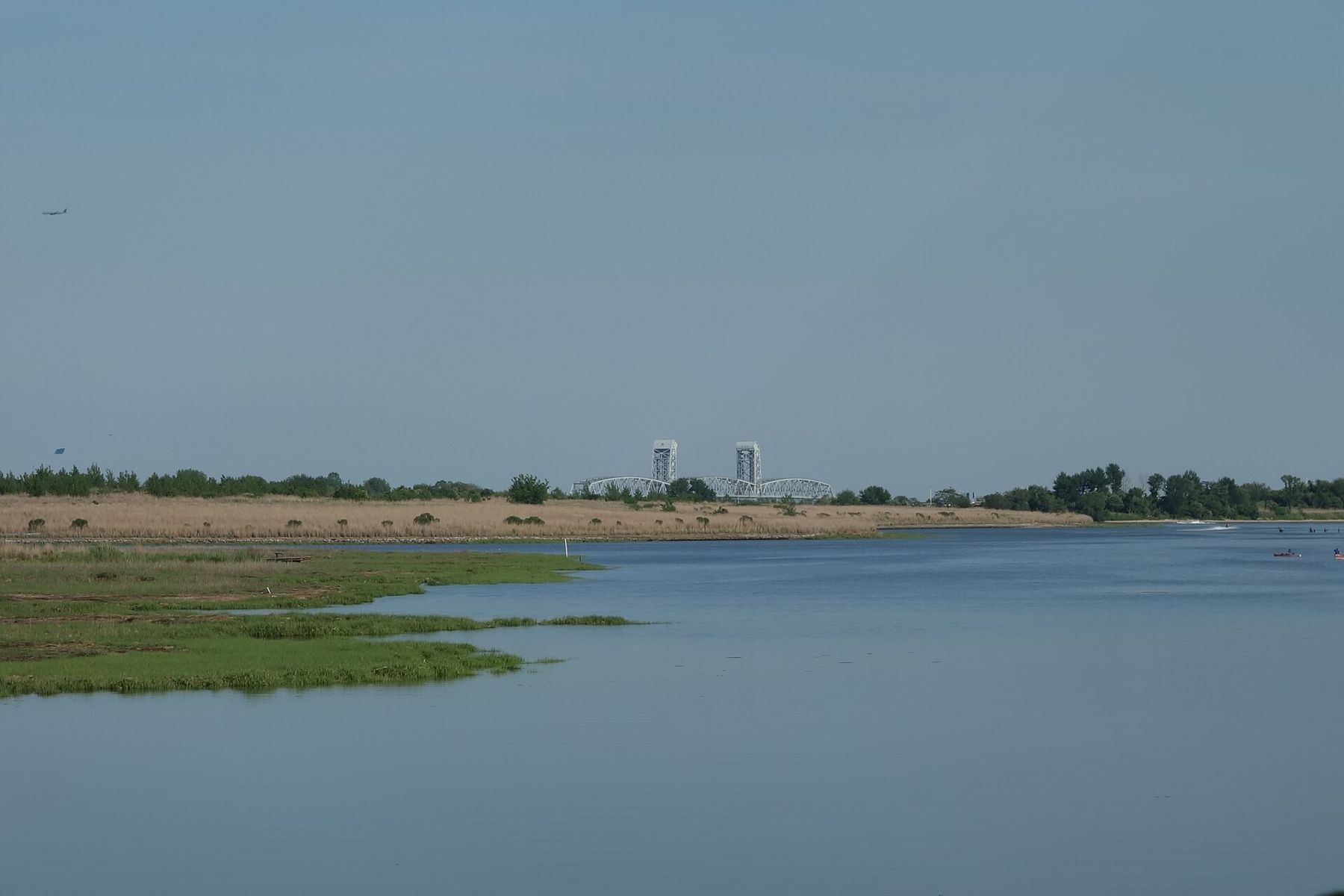
Swallows skim the grass for insects as the light goes. Red-winged blackbirds call from the reeds, and from midsummer the first southbound shorebirds may appear on exposed mud: yellowlegs, small sandpipers and the occasional willet. None of these appearances is guaranteed, and some evenings are quiet. That is part of a marsh, too.
Sunset over the creek, and the way home
The western side of the creek is the neighborhood of Gerritsen Beach, and in summer the sun goes down behind its rooftops. From the lookout points on the trail, the light turns the cordgrass gold and then gray, and the channels shine with the last of the sky. It is a good half hour to stop walking and just watch.
i
Before you leave, note the practical side. Mosquitoes rise from the marsh at dusk on still evenings, and in midsummer greenhead flies can bite hard in the heat of the day. Use repellent and wear long, light-colored clothing. Ticks live in the tall grass along the trail edges, so stay on the path and check yourself at home. Bring water, since there may be none available outside the nature center's hours.
Buses run along Flatbush Avenue and Avenue U, and several stop within walking distance of the nature center; routes and schedules change, so check them before you set out and again for the return trip, as evening service is less frequent. The trail is unlit, so leave enough time to walk back to the street while there is still light, and check park hours before you go.
If this creek is your first salt marsh, the next step is a bigger one. Jamaica Bay lies just to the east, and its refuge has a long loop of its own around West Pond, described in a first walk round West Pond.