i
The Bronx · Van Cortlandt Park
Van Cortlandt Park: the lake, the swamp and the old aqueduct
- Range
- Van Cortlandt Park
- Habitat
- Freshwater lake
- Cattail swamp
- Oak and hickory forest
- Brookside wetland
- Field marks
- A long lake with ducks and geese, cattails and reeds at its north end, a trail on an old railroad bed, and wooded ridges beyond.
- Best season
- April, May, September, October
- Transit
- 1 train to Van Cortlandt Park-242 St
- From Midtown
- 1 train to 242 St
- Pack
- Binoculars, water, trail map, waterproof shoes
Most people know Van Cortlandt Park for its playing fields, its golf course and its cross-country course. Fewer know that behind the parade ground lies a lake with a swamp at its head, a brook that flows in from the north and then disappears, and forests on rocky ridges that feel far from the city. All of it is a short walk from the last stop of the 1 train.
The lake and its reedy end
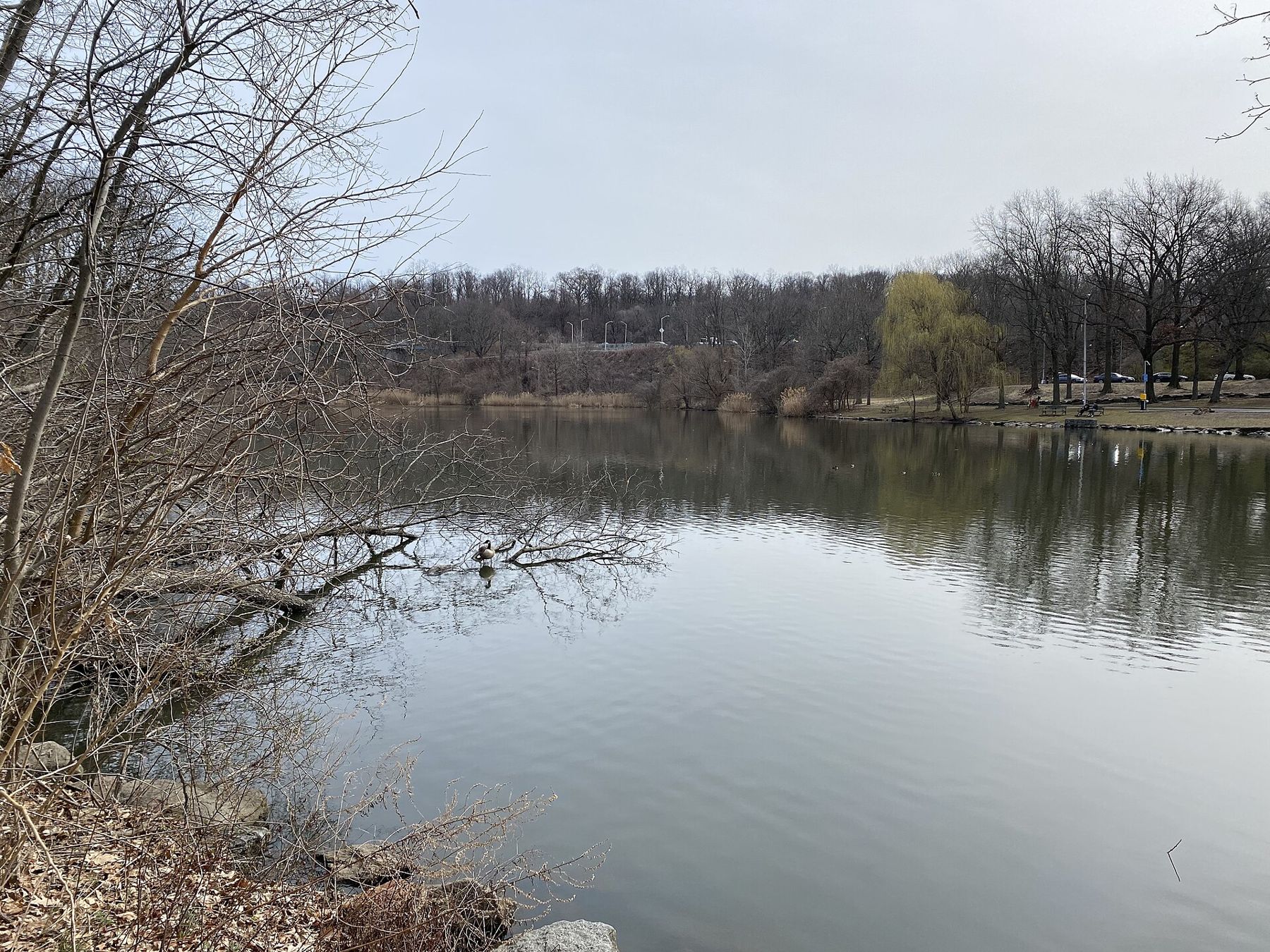
Van Cortlandt Lake is the largest freshwater lake in the Bronx. It was made centuries ago by damming Tibbetts Brook to power a mill, and today it is a long, quiet stretch of water fringed with trees, with a path running along much of its edge.
The south end, near the golf course and the old mansion, is open and busy with geese and ducks. The north end is different. Here the lake narrows and turns into swamp: cattails, reeds, shrubby thickets and standing water. This is the most interesting part for a naturalist. Red-winged blackbirds call from the cattails from early spring, swallows hunt low over the water, and herons and egrets stalk the shallows in warm months.
i
The park takes its name from the Van Cortlandt family, whose farm and mills once worked this valley. Their stone house, built in the eighteenth century, still stands near the south end of the lake and is now a museum; its opening days are limited, so check before planning a visit around it. The mill pond that powered the family's business is the lake you see today, much changed but still fed by the same brook.
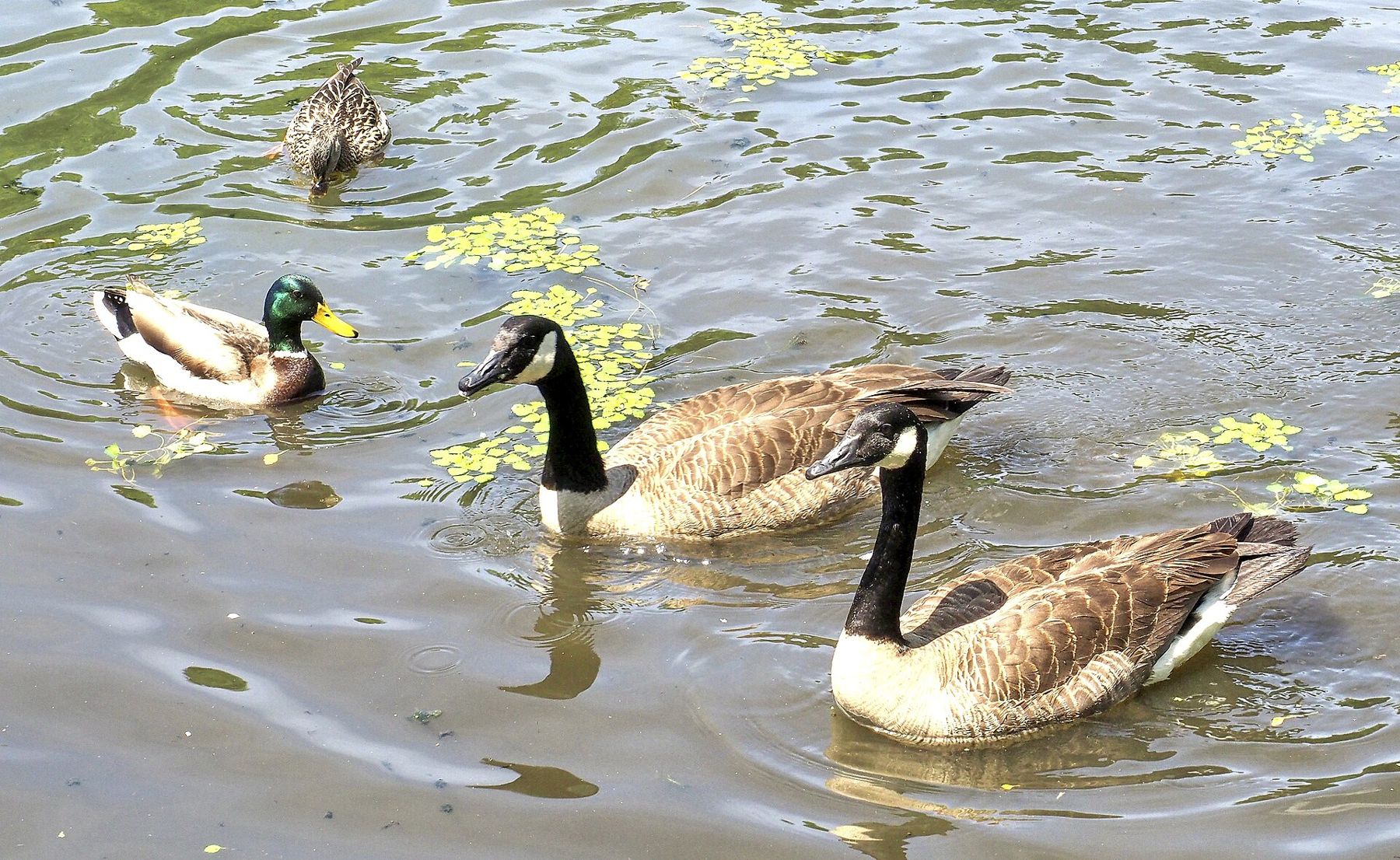
Mallards and Canada geese are year-round residents, but look closer at the edges for wood ducks, which nest in tree holes near the water, and for migrant ducks in spring and autumn. In winter, if the lake stays open, other diving and dabbling ducks may drop in.
Come early. In the first hour after sunrise the swamp is at its loudest, with blackbirds, wrens and warblers singing from the reeds, and a heron may still be standing motionless in the open water before walkers and runners arrive.
A brook that goes underground
Tibbetts Brook flows south from Yonkers, through the northern part of the park and into the lake. Below the lake, its water no longer runs in an open stream: it is carried into the city's sewer system. For years there have been plans to bring part of the brook back to the surface and let it run in a channel again, which would change this part of the park. Whatever happens, the stretch of brook and wetland north of the lake is worth walking now.
Compare plate IIIAlley Pond Park: the big tulip tree and the kettle pondsWalking the old water line
The Old Croton Aqueduct once carried water from the Croton River in Westchester down into Manhattan, beginning in the 1840s. It was a great feat of engineering, and much of its route is now a walking trail. A section of that trail crosses Van Cortlandt Park, running through woods on a raised, level path above the water line.
The park is also crossed by other long trails. One follows the bed of an old railroad along the lake's east side, a flat, easy walk with views over the water and the swamp. Others climb into the woods. Trails are marked with signs and blazes, but they cross roads and each other often, so a map is useful.
Into the Northwest Forest
In the northwest corner of the park, the Northwest Forest covers rocky ridges with oaks, hickories and tulip trees, some of them old and large. It is one of several forest areas in the park, and it feels remote despite the highways not far away.
Spring migration, from late April through May, is the best time to walk these woods. Warblers, vireos, thrushes and other songbirds move through the canopy, and woodland wildflowers bloom before the leaves close over. In autumn, migrants return and the forest turns color. For the whole calendar, see the birding year in the five boroughs.
If you like walking old forest over rough ground, the woods of Inwood Hill Park at the north tip of Manhattan offer something similar, a little further south.
Arriving at the top of the line
Take the 1 train to its northern end at Van Cortlandt Park-242 Street. The station is elevated, and the park lies across Broadway. The southern entrance near the station leads past playing fields towards the lake and the mansion.
i
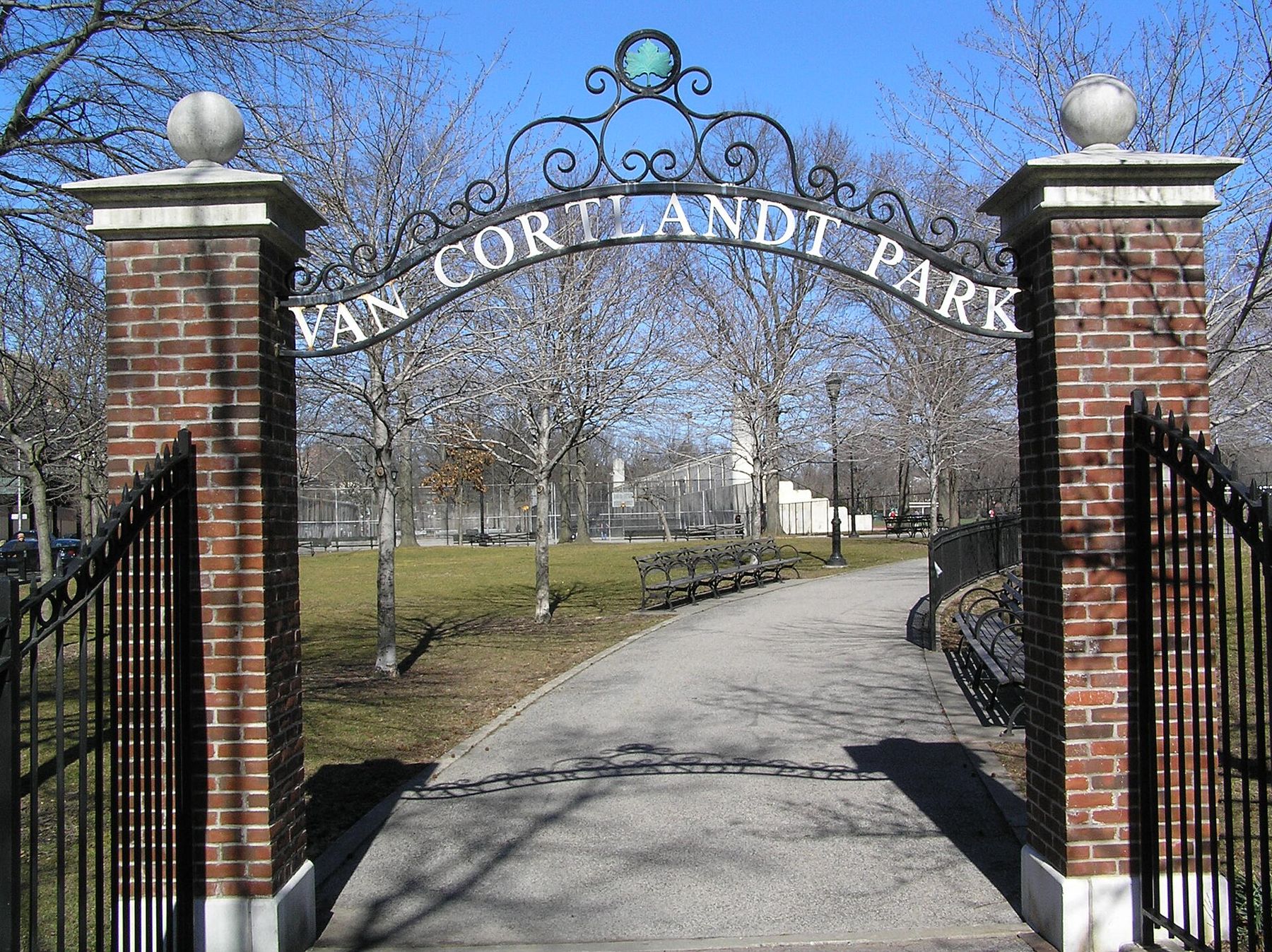
From there, follow paths north along the lake to reach the swamp, or east and north into the woods. The park is large; allow a half day or more if you want to see the lake, the swamp and one of the forests.
Wet feet and other small warnings
- Mud. Paths near the swamp and the brook can be wet and muddy, especially in spring. Waterproof shoes help.
- Ticks. Present in the woods and long grass. Check yourself afterwards.
- Poison ivy. Common along trail edges and in the swamp margins.
- Mosquitoes. Plentiful around the swamp in summer.
- Roads. Several trails cross busy roads and parkways; cross with care.
- Changes. Restoration and construction work can close paths; check current information before you go.
A visit that starts at the swamp at dawn in May, moves on to the forest, and ends with a slow walk back along the lake is as good a morning of nature as the Bronx can offer.