i
The Bronx · Pelham Bay
The Kazimiroff Nature Trail, loop by loop
- Range
- Pelham Bay
- Habitat
- Oak woodland
- Rocky shore
- Salt marsh edge
- Field marks
- Oak woods and old planted evergreens, boulders among the trees, glimpses of the Sound through the trunks, and marsh grass at the edges.
- Best season
- April, May, October, November
- Transit
- 6 train to Pelham Bay Park, then bus or walk
- From Midtown
- 6 train, then bus or walk
- Pack
- Binoculars, water, trail map, insect repellent
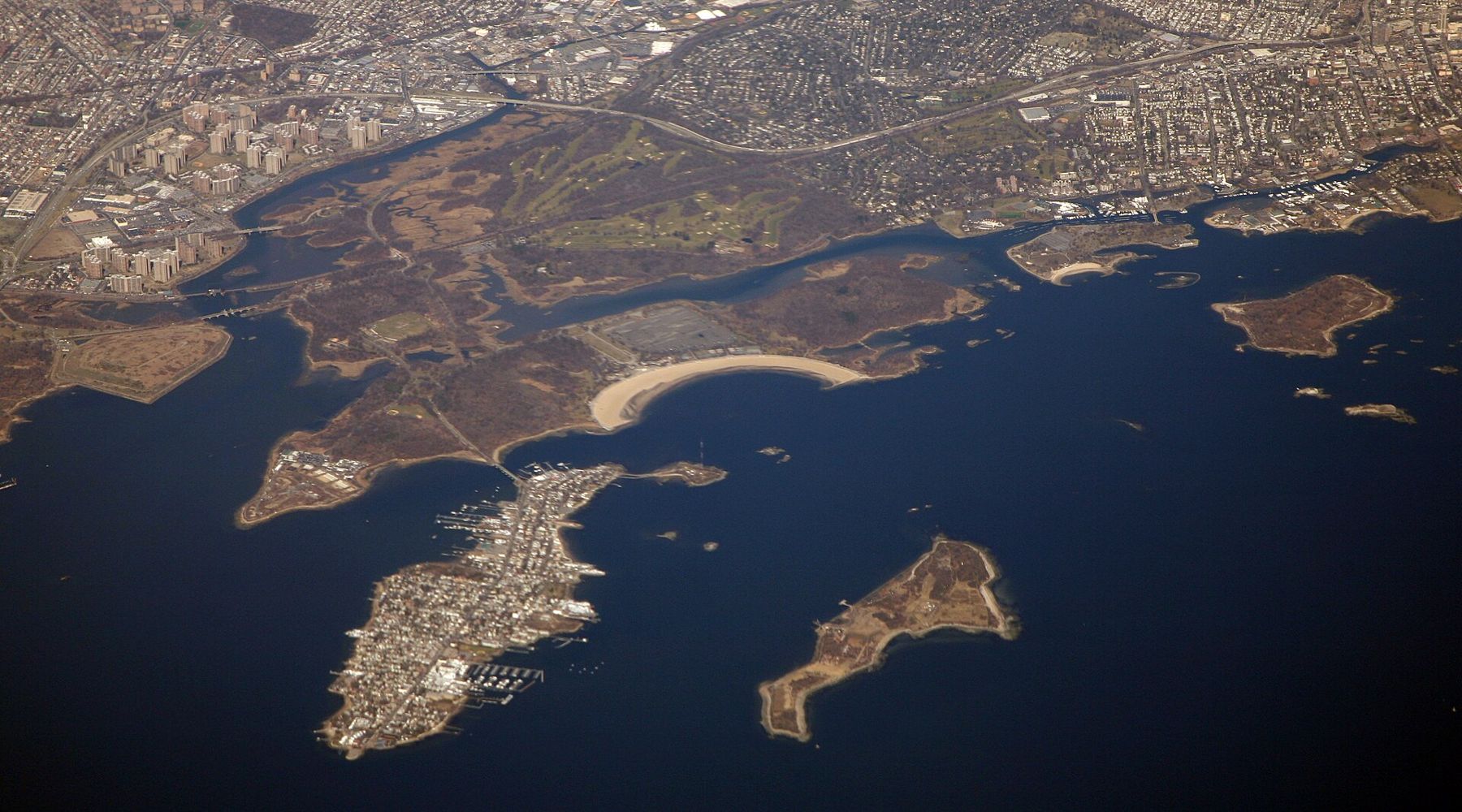
At the north end of Orchard Beach, past the last of the parking lots, a path leaves the open sand and enters the trees. Within a few minutes the beach is out of sight and out of hearing. This is the Kazimiroff Nature Trail, a network of loops through the woods of Hunter Island in Pelham Bay Park, and one of the quietest walks in the Bronx.
A trail with a naturalist's name
The trail is named for Theodore Kazimiroff, a Bronx dentist who became the borough's best-known amateur naturalist and historian. He spent much of his life walking, studying and writing about Pelham Bay Park, its birds and plants, its rocks and its human past, and he argued hard for keeping its wild parts wild. Naming a trail through the park's quietest woods after him was a fitting choice.
That spirit sets the tone. This is not a trail for running or for racing round. Bring binoculars, walk slowly, and stop often.
How the loops fit together
The trail is laid out as a set of connected loops rather than a single line. A short loop near the trailhead takes you into the woods and back in well under an hour. Longer loops reach further out across the island towards the shore, and you can link them to make a walk of a couple of hours. Posts and signs mark the paths, though markers can be missing or damaged, so pick up a map or study one before you go.
- The entrance woods. Oaks and other hardwoods close in quickly. In spring this is where the first warblers and thrushes appear.
- The evergreens. Parts of the island hold stands of planted conifers, a reminder that Hunter Island was once a private estate. They are a sheltered place in winter.
- The boulders. Large glacial erratics sit among the trees, dropped by the melting ice sheet at the end of the last ice age.
- The shore. The longer loops come close to the rocky shore, where you can look out over the water towards Twin Island and the Sound.
Stones and stories
Long before the estate, this shore belonged to the Siwanoy, a Native people of the region. Some of the large boulders on and around Hunter Island are linked by local tradition with Siwanoy ceremony and memory. The details are uncertain, and they are best told as tradition rather than fact. What is certain is that people have lived beside these rocks for a very long time, and that the stones should be left as they are: no climbing on fragile surfaces, no carving, no moving.
The island's later history is easier to trace. A large house once stood here, and the estate's trees and stone walls left marks in the woods. In the 1930s, the building of Orchard Beach joined Hunter Island to the mainland, along with its neighbor Twin Island, by filling the water between them.
What lives in the woods
The oak woods are at their liveliest in spring migration, from late April through May, when warblers, vireos and thrushes move through. In summer the woods are quieter and greener, with breeding birds and plenty of mosquitoes. Autumn brings another wave of migrants and fine color in the oaks and other hardwoods.
In winter, the bare woods and evergreen stands may shelter roosting owls. If you see one, look briefly from the path, keep quiet, and move on. Do not play calls, do not approach, and do not tell others where it is. The full case for keeping your distance, and for the seals on the offshore rocks, is set out in Hunter Island in winter.
White-tailed deer are now common in the park. Raccoons leave tracks in the mud. Along the marshy edges, look for herons, egrets in warm months, and the small birds of the reeds.
Orchard Beach when the crowds are gone
Orchard Beach is a crescent of sand laid out in the 1930s, and on summer days it fills with swimmers and music. Outside the swimming season it empties. In spring, autumn and winter the long promenade is a fine place to scan the water for ducks, loons and gulls, and to watch the light change over the Sound.
Beach facilities may be closed off-season, so carry water and anything else you need.
From the end of the 6 line
Take the 6 train to its northern end at Pelham Bay Park. From there, the walk to Orchard Beach and the trailhead is long, an hour or more through parts of the park and along roads. City buses serve the area, with extra service towards the beach in summer, but routes and timetables change, so check before you go.
i

Allow plenty of time, especially on short winter days, and plan to be out of the woods before dark.
Ticks, ivy and other small matters
- Ticks are common in the woods and grass. Long trousers and a thorough check afterwards are wise.
- Poison ivy lines the edges of many of the loops; learn its three leaves.
- Mosquitoes can be bad in summer, especially near the marsh.
- Paths can be muddy after rain and icy in winter; wear sturdy shoes.
- Rules and closures change; check the park's current information before you go.
For a reserve with a similar mix of woods, ponds and quiet, try Clay Pit Ponds on Staten Island, at the opposite corner of the city.