i
Manhattan · Inwood
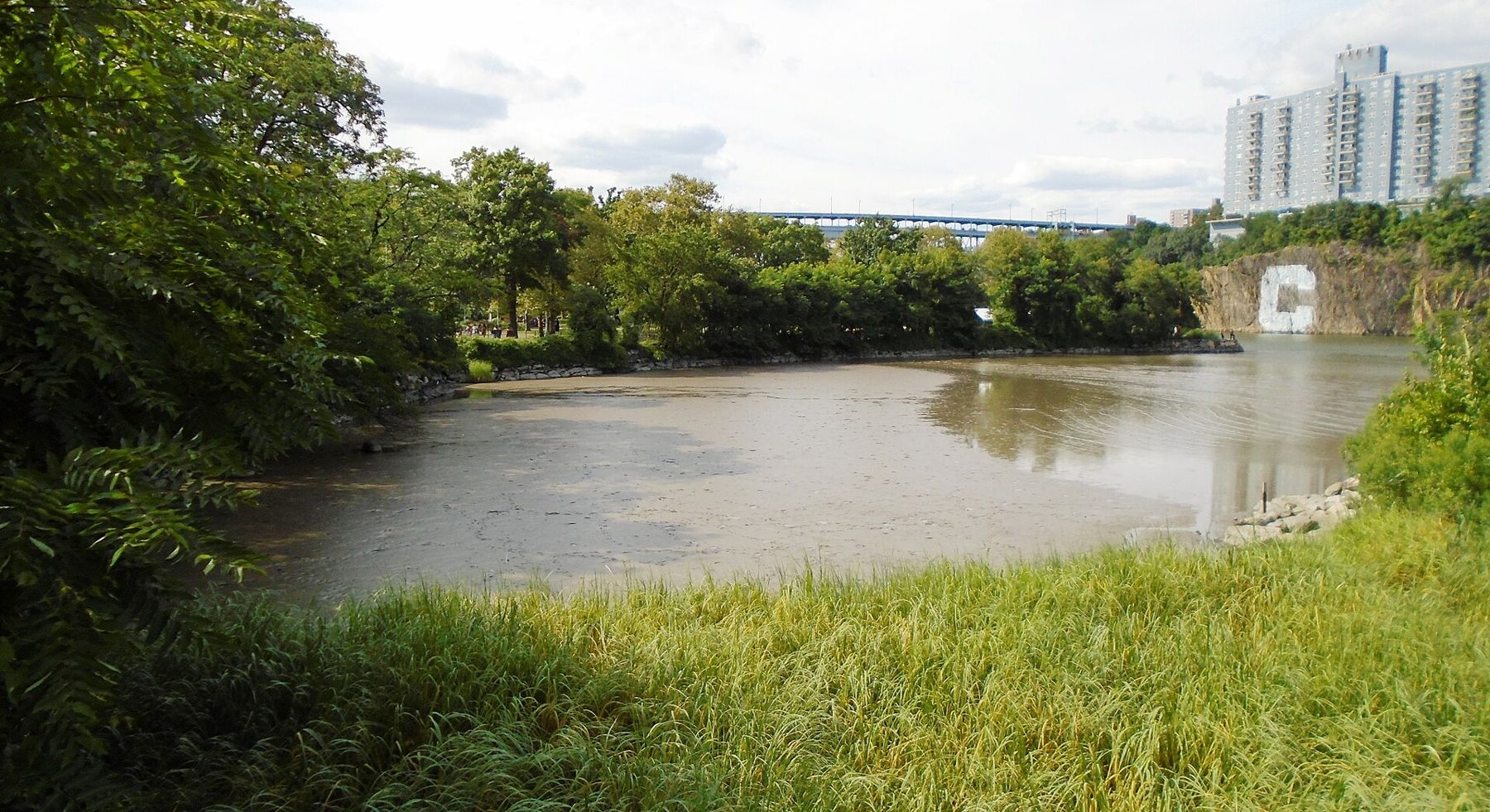
The cove at low tide: herons and the marsh edge
- Range
- Inwood
- Habitat
- Salt marsh cove
- Tidal mudflat
- Restored creek marsh
- Field marks
- A shallow cove that drains to shining mud, marsh grass at the edges, egrets and herons stalking, a big painted C on the far cliff.
- Best season
- May to September
- Transit
- A train to Inwood-207 St, then walk
- From Midtown
- A train to Inwood-207 St
- Pack
- Binoculars, tide table, sun hat, insect repellent
Most of Manhattan's shoreline is wall, pier and riprap. At the island's northern tip, in Inwood Hill Park, there is an exception: a shallow cove where the tide comes and goes over mud and marsh grass, much as it did before the city grew up around it. It is often called the last natural salt marsh in Manhattan. At low tide, when the water drains away and the mud shines, herons and egrets arrive to feed.
A cove that empties twice a day
The cove opens onto Spuyten Duyvil Creek, the channel between Manhattan and the Bronx. Like the rest of the waters around the city, it is tidal: the water rises and falls roughly twice a day, with high and low tides moving later each day.
At high tide, the cove is a calm pool, and birds are few. As the tide falls, mudflats appear, first at the edges and then across much of the cove. Small fish, crabs and worms are left in shallow water and soft mud, and that is what the birds come for. The hour or two around low tide is usually the best time for a visit.
To time it, look up the tide for the Harlem River or Spuyten Duyvil area before you leave home. If you have never used a tide table, the short guide to reading a tide table for the city's marshes explains how.
Egrets, herons and who else comes to the mud
From spring to early autumn, great egrets and snowy egrets are the most visible visitors. The great egret is tall, with a yellow bill and black legs and feet; the smaller snowy egret has a black bill and bright yellow feet, which it often stirs in the water to flush prey. Great blue herons, the largest of the group, stand motionless at the edge and strike suddenly.
Look also for black-crowned night-herons, stocky and hunched, often resting in the trees at the edge of the cove during the day. Belted kingfishers rattle along the shore, cormorants fish the creek, and gulls and ducks are present in most seasons. In spring and late summer, a few sandpipers may stop on the mud.
i
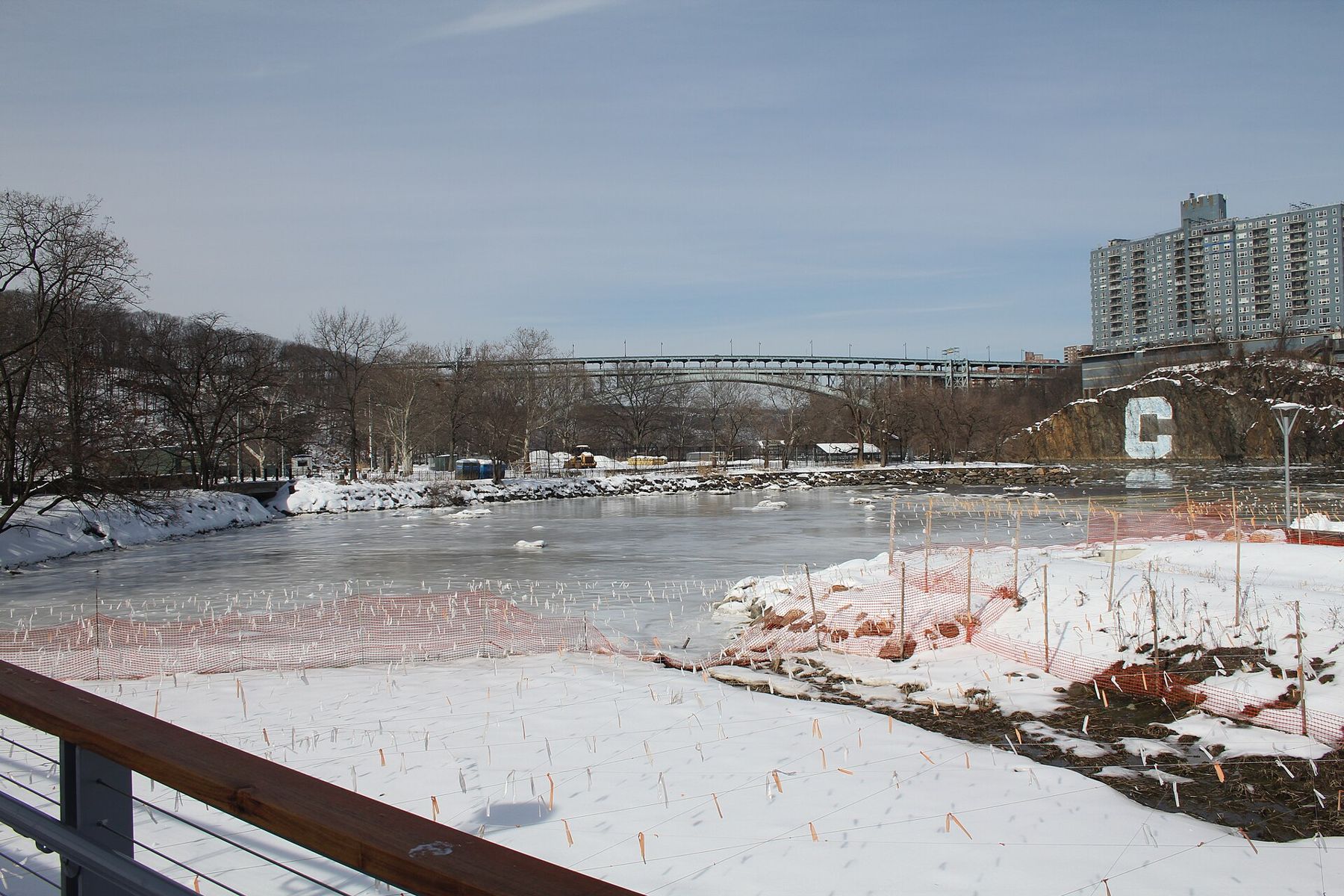
Winter changes the cast. Egrets leave for the south, ice may form at the edges of the cove, and ducks take over the open water: buffleheads, mergansers and others that ride the creek in cold months. A great blue heron sometimes stays through the winter, hunched at the edge on the coldest days.
Whatever the season, watch from the path and let the birds set the distance. A heron that keeps feeding is a heron that is not bothered; one that stops, straightens its neck and stares at you is about to leave. Step back, wait, and it will often settle again.
As always, no bird is promised. Some low tides bring a dozen egrets; others bring none. Patience and repeat visits pay.
Compare plate IIShorebird season on Jamaica Bay: what to look for in AugustMuscota Marsh, a little way along the creek
A short walk east along Spuyten Duyvil Creek brings you to Muscota Marsh, a small marsh created in recent years along the shore. It has been planted with native marsh grasses and shrubs, and paths and a viewing area let you look over it without walking on it.
Muscota Marsh and the cove together make a good low-tide circuit. Across the creek on the Bronx side rises a rock cliff with a large painted letter C, a well-known landmark, and above it all the arch of the Henry Hudson Bridge.
i
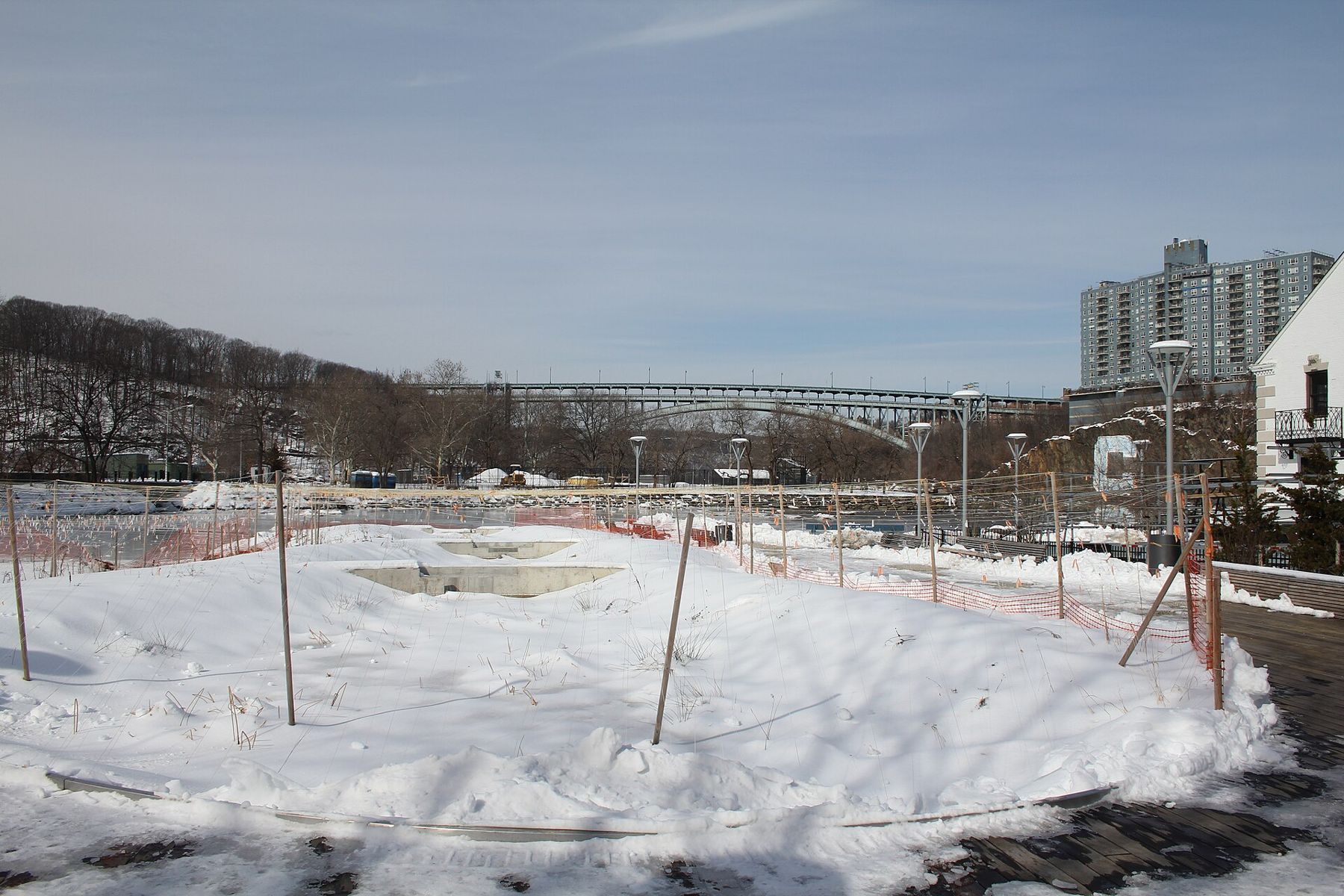
Restoration work around the marsh and the creek shore comes and goes. In some seasons you will find fencing, young plants or closed paths. Respect any barriers; they are there to let the marsh take hold.
The canal and the creek
The waters at the top of Manhattan were reshaped by people. In the late nineteenth century, the Harlem River Ship Canal was cut to give ships a straighter route between the Hudson and the Harlem River, and the old, winding course of the creek was partly filled. The cove in Inwood Hill Park survived those changes, which is part of what makes it special.
Above the cove, the forested ridges of the park rise steeply. In spring they hold migrating songbirds, as described in spring warblers from the A train. A morning of warblers in the woods followed by a low-tide visit to the cove makes a full day at the top of the island.
Getting to the water's edge
Take the A train to its northern end at Inwood-207 Street, then walk west a few blocks into the park. The cove lies at the north end, near the flat lawns and ball fields; paths run along its southern and western edges. The 1 train stops a short walk to the east.
Mud, sun and the marsh
- Stay on paths. The marsh grass and mud are fragile, and the mud can be deeper than it looks.
- Insects. Mosquitoes and biting flies can be active in summer, especially near dusk.
- Sun. There is little shade along the water's edge on summer afternoons.
- Ticks. Present in the long grass around the edges; check yourself afterwards.
- Changes. Paths, rules and restoration areas change; check current information before you go.
If you enjoy the cove, other city marshes work on the same rhythm. Gerritsen Creek on a summer evening, in Brooklyn, is a larger salt marsh where fiddler crabs come out as the tide drops.